For organizations in critical infrastructure and the public sector, where sensitive information flows through every meeting, hope isn’t enough.
Why no-phone policies fail
No-phone policies fail for the same reason every time: friction. At the first meeting, everyone follows the rule. By the third, someone is “just on a call.” By the tenth, the policy is dead. Human behavior always routes around protections that require discipline.
The same applies to software-based solutions. A microphone blocker requires the right app to be active, the phone to be up to date, the setting not to have been reset by a patch. Something in that chain fails sooner or later.
Protection that doesn't depend on people
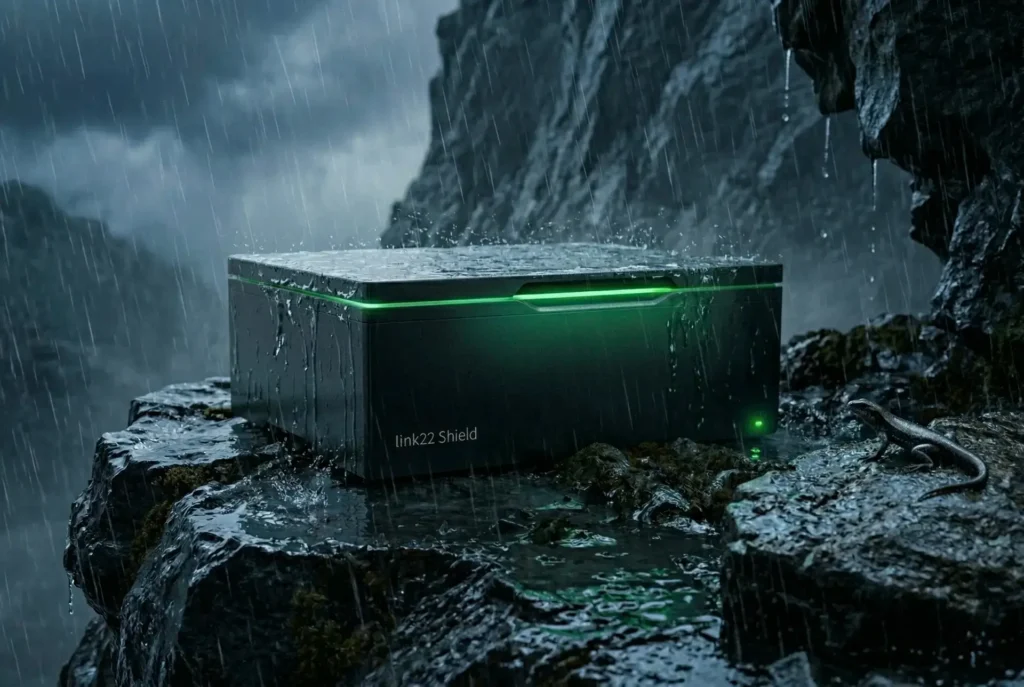
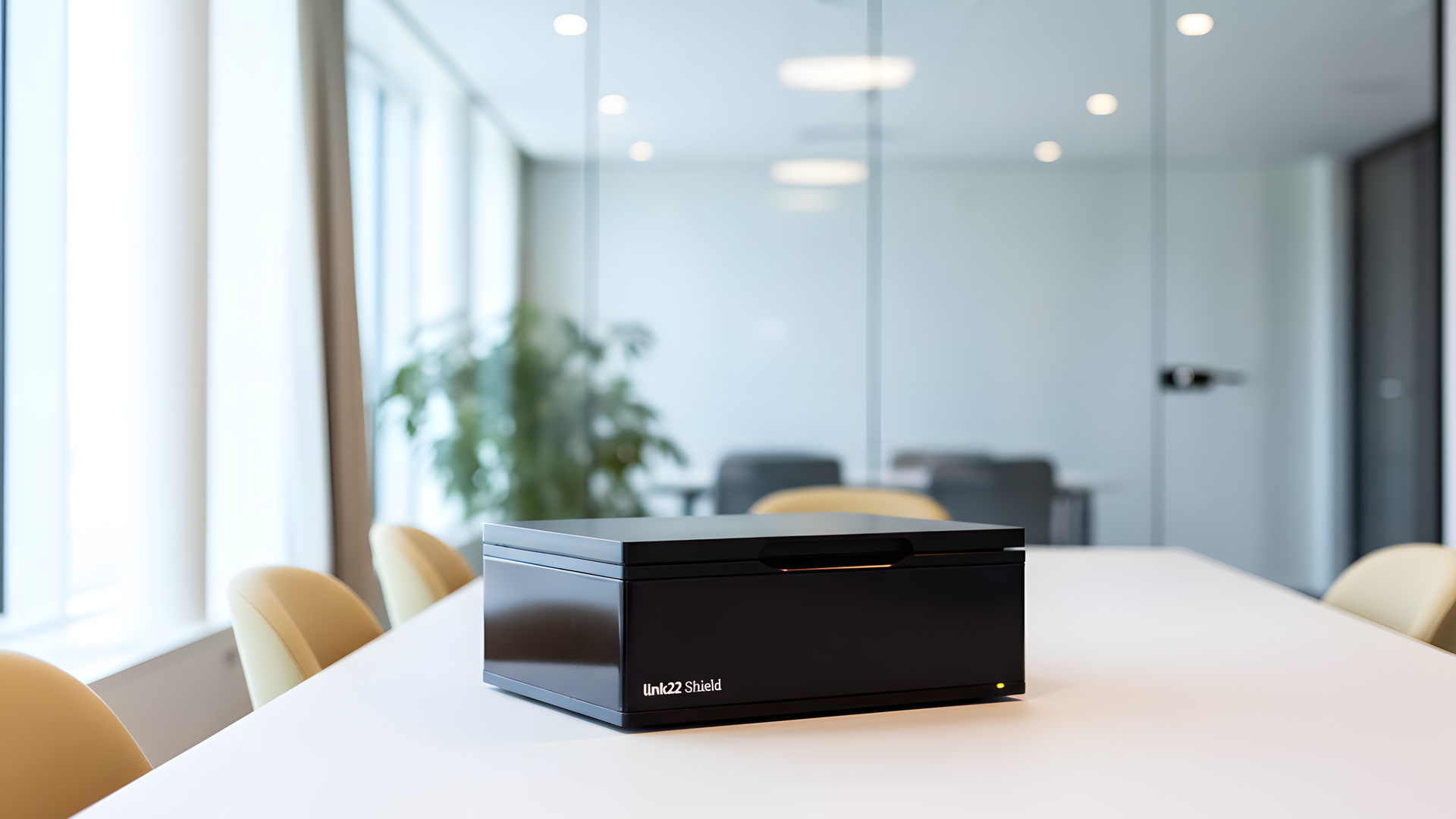
link22 Shield is a noisebox that lives on the conference table. There is nothing to configure. No app to launch. No policy to remind anyone of. Participants place their devices inside and close the lid. The meeting begins.
The physical protection is consistent in a way that settings and routines cannot be. It does not change between meetings. It does not stop working after a software update. It is not forgotten when stress is high.
Repeatable security for regulated environments
For operations under the NIS2 directive, repeatability is the point. Auditors do not just ask whether the measure exists; they ask whether you can show it works consistently.
Shield provides a documentable, physical fail-safe that is the same at every meeting. That is the difference between “we have a policy” and “we have a control we can verify.”
See it for yourself in 20 minutes
The simplest way to decide whether Shield fits your environment is to see the device in use. We demo it in 20 minutes, no slides, focused on your specific meeting flow.
Book a demo here or visit our Contact page.